Under the National Building Code of Canada and ASTM D2434, a laboratory permeability test (falling/constant head) provides the hydraulic conductivity values essential for foundation design in Chatham-Kent. The region’s glaciolacustrine clay tills and sand aquifers exhibit highly variable permeability — ranging from 10⁻⁸ m/s in clays to 10⁻⁴ m/s in sands. Relying on published tables instead of site-specific testing can misrepresent drainage behavior. Our lab uses triaxial cells and rigid-wall permeameters to capture the true coefficient of permeability, which directly impacts dewatering plans and drainage design. For projects near the Thames River, we combine this data with a drainage geotechnical study to evaluate seepage patterns and groundwater control needs.
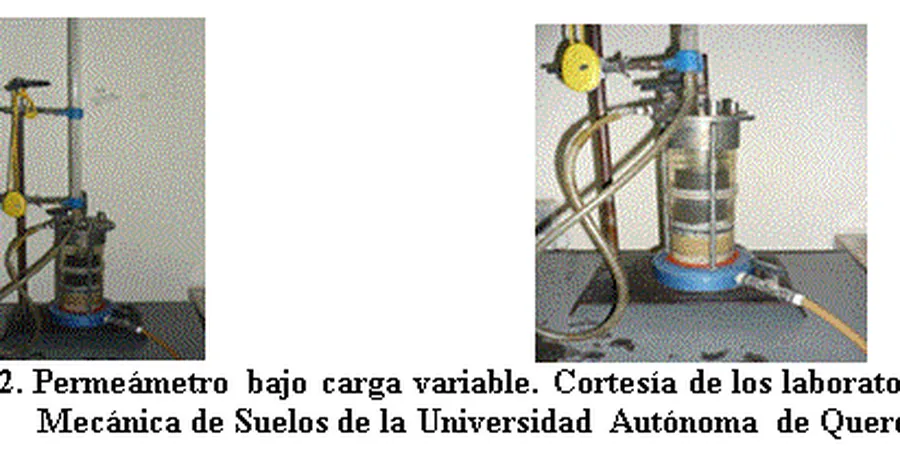
Hydraulic conductivity values from lab tests directly inform dewatering rates and drain spacing. A 50% error in k can double excavation costs.